As someone who’s spent the last five years helping businesses in Kochi build authentic local brands, I’ve witnessed firsthand how the branding landscape has transformed. Local branding is simply the practice of creating a brand identity that resonates specifically with your local community and market, rather than trying to appeal to everyone, everywhere.
Why am I talking about this in 2025? Because this year marks a significant turning point. AI-driven personalization has made consumers expect more tailored experiences, trust in local businesses has skyrocketed post-pandemic, and the “shop local” movement isn’t just a trend anymore—it’s how people live. Business owners today need three things to survive: visibility in their community, genuine trust from their customers, and clear differentiation from competitors.
Table of Contents
ToggleWhat Exactly is Local Branding?
Local branding is branding tailored specifically for local markets and communities. It’s about creating a brand identity that feels authentically connected to the place where your business operates and the people it serves.
The core components include your visual identity (logo, colors, design elements), messaging that speaks to local values, genuine cultural connections with your community, and building customer trust through local relevance. Think of it as your business becoming a recognizable part of the local fabric, not just another commercial entity.
What's the Difference Between Local Branding and Generic Branding?
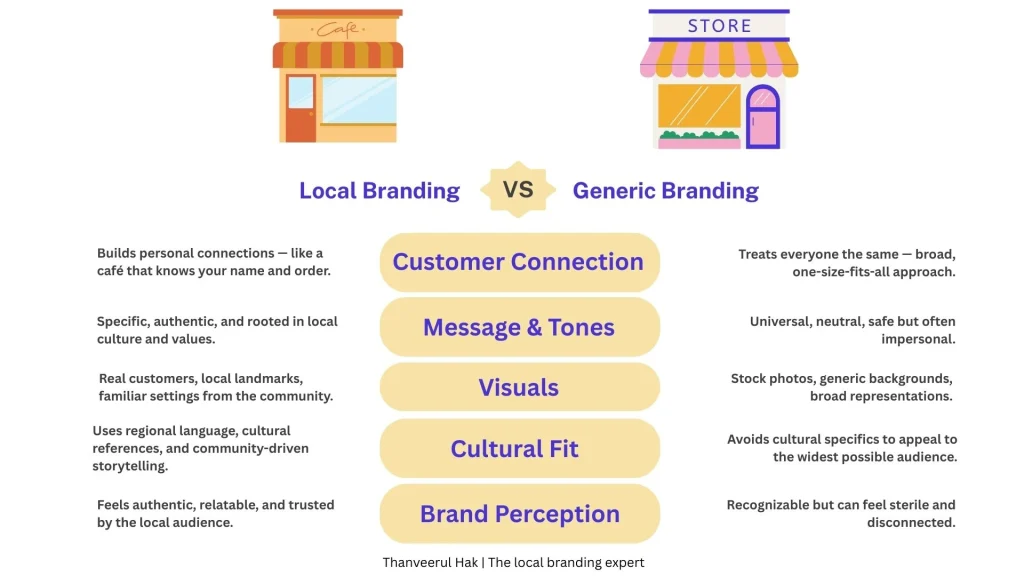
The difference is like comparing a neighborhood café that knows your name and coffee order versus a chain store where you’re just another transaction.
Generic branding focuses on broad appeal—one message, one look, targeting the widest possible audience. It’s safe but sterile. Local branding, on the other hand, embraces specificity. It reflects local culture, uses regional language nuances, celebrates community events, and acknowledges local challenges and aspirations.
For example, a generic branding approach might use stock photos of diverse people in generic settings. Local branding would feature real customers from your community, showcase local landmarks, or reference shared cultural experiences that only locals would understand.
Why Does Local Branding Matter in 2025?
Three major shifts have made local branding essential this year. Consumers are actively choosing local businesses over chains, digital discovery has become hyper-localized with “near me” searches dominating, and authentic community trust now outweighs expensive advertising campaigns. These changes have fundamentally altered how customers find, evaluate, and choose businesses. First, consumers actively seek out local businesses—the “support local” movement has evolved from pandemic solidarity to permanent lifestyle choice. People want to know their money is staying in their community.
Second, digital discovery has gone hyper-local. People don’t just Google “restaurant” anymore—they search “best biryani near me in Kochi.” Local search and SEO now determine who gets found and who gets forgotten.
Third, trust beats flash every time. In an era of fake reviews and corporate scandals, local businesses that show authentic community connection automatically have a competitive advantage. Familiarity and local reputation are more powerful than expensive advertising campaigns.
What Are the Key Elements of Strong Local Branding?
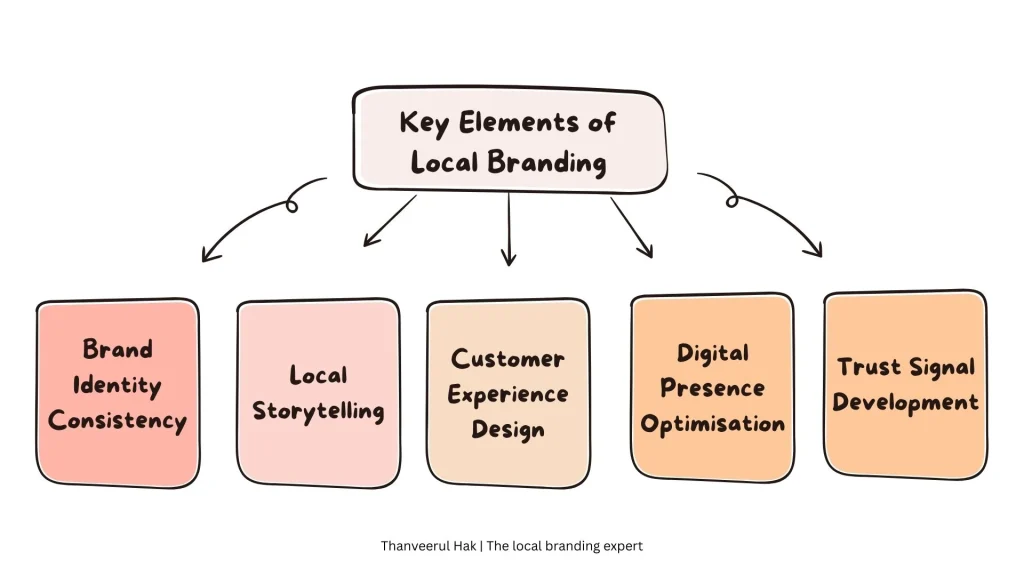
Strong local branding rests on five pillars: consistent brand identity, authentic local storytelling, cohesive customer experience, optimized digital presence, and credible trust builders. Each pillar supports and strengthens the others to create a brand that truly belongs in its community.
Brand Identity Consistency
Your brand identity must be visually consistent across all touchpoints—logo, colors, and design elements that people recognize instantly. This means your business card should feel connected to your storefront, which should match your website and social media profiles. Consistency builds familiarity, and familiarity builds trust. In my experience working with Kochi businesses, those with cohesive visual identities get recognized 3x faster than those with scattered branding.
Local Storytelling
Local storytelling is crucial for emotional connection. Your brand narrative should reflect community culture, local heritage, and shared values. This isn’t about making up stories; it’s about authentically communicating why your business matters to this specific place and showing that you truly understand the local context. Share your founder’s journey, celebrate local traditions, acknowledge community challenges you help solve. People don’t just buy products—they buy stories they want to be part of.
Customer Experience Design
Customer experience encompasses both your physical presence (store atmosphere, service quality) and digital presence (website, social media responsiveness). These must feel cohesive and locally relevant. A customer should feel the same warmth and local connection whether they’re in your shop, browsing your website, or interacting with you on social media. Every touchpoint should reinforce why you belong in this community.
Digital Presence Optimization
Your digital presence needs optimization for local search—updated Google Business Profile, location-based SEO, and social media that engages with local conversations and events. This means using local keywords, posting about neighborhood events, responding to reviews promptly, and ensuring your business appears when people search for services “near me.” Local search and SEO now determine who gets found and who gets forgotten. Your digital presence is your 24/7 brand ambassador.
Trust Signal Development
Trust builders like customer reviews, testimonials from recognizable local names, and visible community involvement create the credibility that converts browsers into buyers. Display awards from local business associations, showcase partnerships with other respected local businesses, and highlight your community contributions. In an era of fake reviews and corporate scandals, local businesses that show authentic community connection automatically have a competitive advantage. These social proofs tell potential customers that their neighbors already trust and value your business.
What Common Mistakes Do Business Owners Make?
I see four major mistakes repeatedly in my practice in Kochi. First, business owners copy big brands instead of developing their unique local identity. What works for a multinational corporation won’t work for a local business—you’re playing a different game entirely.
Second, they ignore their online presence. An outdated Google listing or inactive social media sends the message that your business isn’t current or reliable.
Third, inconsistent messaging across platforms confuses customers. Your website says one thing, your social media another, and your physical store feels completely different.
Fourth, treating branding as just logo design. Your brand is every interaction customers have with your business—from how your phone is answered to how your delivery person behaves.
How Can Business Owners Start Local Branding in 2025?
You can start local branding through five strategic steps: defining your unique local value, aligning your visuals and messaging with your audience, optimizing your online presence, engaging actively with your community, and systematically collecting trust signals. These steps build upon each other to create an authentic local brand that resonates with your community and drives business growth.
Start by defining your unique local value. Ask yourself: what makes your business authentically “of this place”? What would the community lose if you weren’t here? This foundation shapes everything that follows.
Once you understand your local value, align your visuals and messaging with your actual audience. Study your customers—how do they speak? What do they value? What are their daily challenges? Your brand should feel like it was created specifically for them.
With your identity clear, optimize your online presence immediately. Update your Google Business Profile, ensure your website loads fast on mobile, and post regularly on social media with local relevance. Your digital footprint is often the first impression potential customers have.
Beyond digital optimization, actively engage with your community. Participate in local events, form partnerships with other local businesses, and share stories that matter to your neighbors. Real relationships translate into brand loyalty.
Finally, systematically collect and showcase trust signals. Actively request reviews from satisfied customers, document success stories, and display any community recognitions or partnerships prominently. These social proofs validate your local credibility. If you want a detailed, step-by-step process, check out my comprehensive guide on how to build a local brand in Kochi.
What's the Future of Local Branding?
Three trends will shape the future of local branding. AI and hyper-personalization will allow even small businesses to deliver highly customized experiences based on local preferences and behaviors. Nowadays, customers are expecting personalised approaches from businesses.
Sustainability and ethical business practices are becoming table stakes, not differentiators. Local businesses that can demonstrate genuine environmental and social responsibility will have significant advantages.
The rise of “phygital” branding—seamlessly merging offline and online experiences—means your local brand must work equally well in your physical location and digital spaces. Customers expect consistency across all touchpoints.
Why Local Branding Isn't Optional Anymore
Local branding isn’t optional in 2025—it’s business survival. The businesses thriving in today’s market are those that have built genuine connections with their communities, not just customer bases.
The encouraging news? You don’t need a massive budget to start. You need authenticity, consistency, and commitment to serving your local community better than anyone else can.
Ready to audit your current brand presence? Start by honestly evaluating how well your business reflects and serves your local community. If you need guidance developing an authentic local brand strategy, I’d be happy to help you create something that truly represents your business’s place in our community.
Frequently Asked Questions
What exactly is local branding?
Local branding is the process of creating a brand identity tailored to your specific community, making your business feel authentically connected to your local market.
Why is local branding important in 2025?
Consumers value authentic, community-based businesses more than ever, and local branding helps you build trust, visibility, and lasting loyalty in your area.
What are the key elements of strong local branding?
Consistent visuals, authentic local storytelling, a cohesive customer experience, optimized local digital presence, and clear trust signals are essential.
How can a small business get started with local branding?
Define what makes your business unique locally, align your messaging and visuals, optimize your online presence, engage in your community, and showcase customer trust.

Hi, this is a comment.
To get started with moderating, editing, and deleting comments, please visit the Comments screen in the dashboard.
Commenter avatars come from Gravatar.